Capuchin Monkeys
Cebus & Sapajus
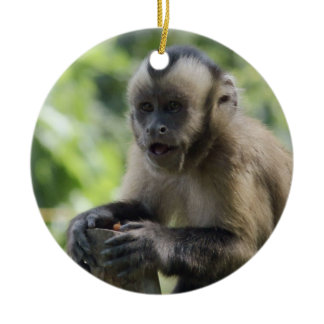
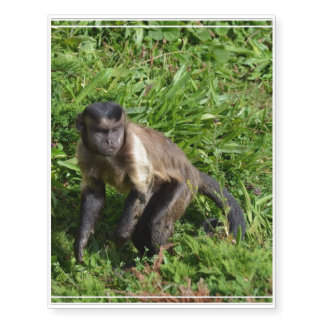
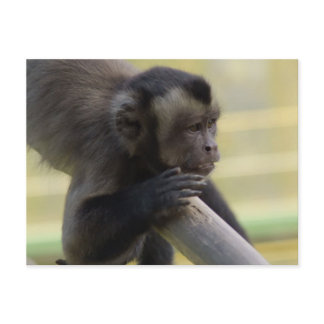
Capuchin monkeys are New World monkeys found in the tropical rainforests and low-lying forests of South and Central America — known for round heads, stocky builds, prehensile tails and unusual intelligence.

Classification
- Kingdom
- Animalia
- Phylum
- Chordata
- Class
- Mammalia
- Order
- Primates
- Family
- Cebidae
Other Names
Sapajou, Ringtail, Organ-grinder Monkey, Capuchins
Size
12–22 inches long and 3–9 lbs.
Description
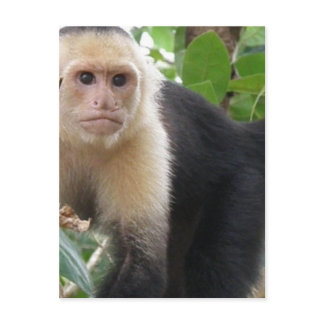
Black, brown, buff, white or a combination, depending on species. Round heads, stocky builds, prehensile tails and opposable thumbs.
Behavior
Diurnal and arboreal.
Diet
Fruit, insects, frogs, vegetation, nuts, flowers, seeds, roots, spiders, snails and small birds.
Communication
Social creatures that scream, whistle and bark to communicate.
Habitat
Tropical rainforest and low-lying forest across South and Central America.
Life Cycle & Society
- Gestation
- 150–160 days
- Sexually Mature
- 4 yrs (F) · 8 yrs (M)
- Life Span
- 20–45 years in the wild
- Athleticism
- Jumps up to 9 feet
- Conservation Status
- Insufficient Data
Capuchins live in groups of 10–30, typically dominated by a single male, over a home range of 124–247 acres. Outside of foraging, much of their time goes to play and mutual grooming. Considered among the most intelligent New World monkeys, capuchins have been observed using simple tools. Natural predators include hawks, eagles, boa constrictors and jaguars.
Selected Sub-species
White-faced Capuchin
Cebus capucinusWhite-fronted Capuchin
Cebus albifronsTufted Capuchin
Cebus apellaGolden-bellied Capuchin
Cebus xanthosternosBlack-capped Capuchin
Sapajus apellaBlack Capuchin
Sapajus nigritus